Oct 29, 2026
Gemini 4 Carbon: Google's new frontier model leads on cybersecurity benchmarks
Gemini 4 Carbon is Google's new frontier model, two weeks after Argon: #1 on the Artificial Analysis Intelligence Index, 88.2% on SEC-bench Pro, and early access for cyber defenders only. What Google reports, the safety numbers, and the price.
 Sir Toastimir
Image: Google
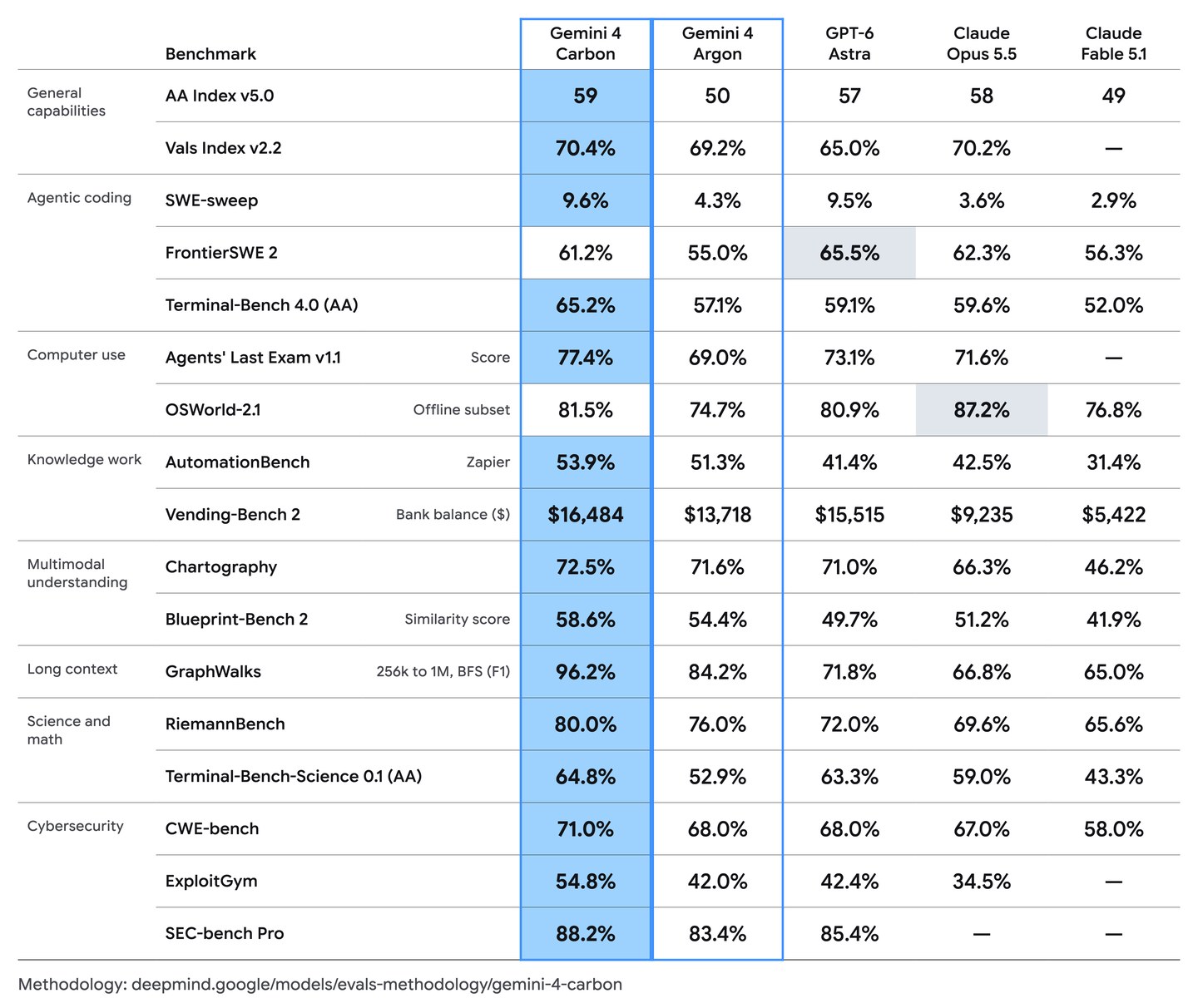
Gemini 4 Carbon is Google's new frontier model, announced Oct 28, 2026, two weeks after Gemini 4 Argon. Google calls it its strongest model, with state-of-the-art cybersecurity and long-horizon capabilities. It ranks #1 on v5.0 of the Artificial Analysis Intelligence Index with a score of 59.
Built for long, hard engineering tasks
Google says Carbon is designed for sustained agentic work. Its internal teams have seen it run for days, working through dead ends on multi-step jobs like root-causing and patching subtle bugs across large codebases and low-level systems. Google also reports better full-stack web development: Carbon gained 89 Elo points on WebDev Arena and sits at #4 with 1769.
The cybersecurity numbers
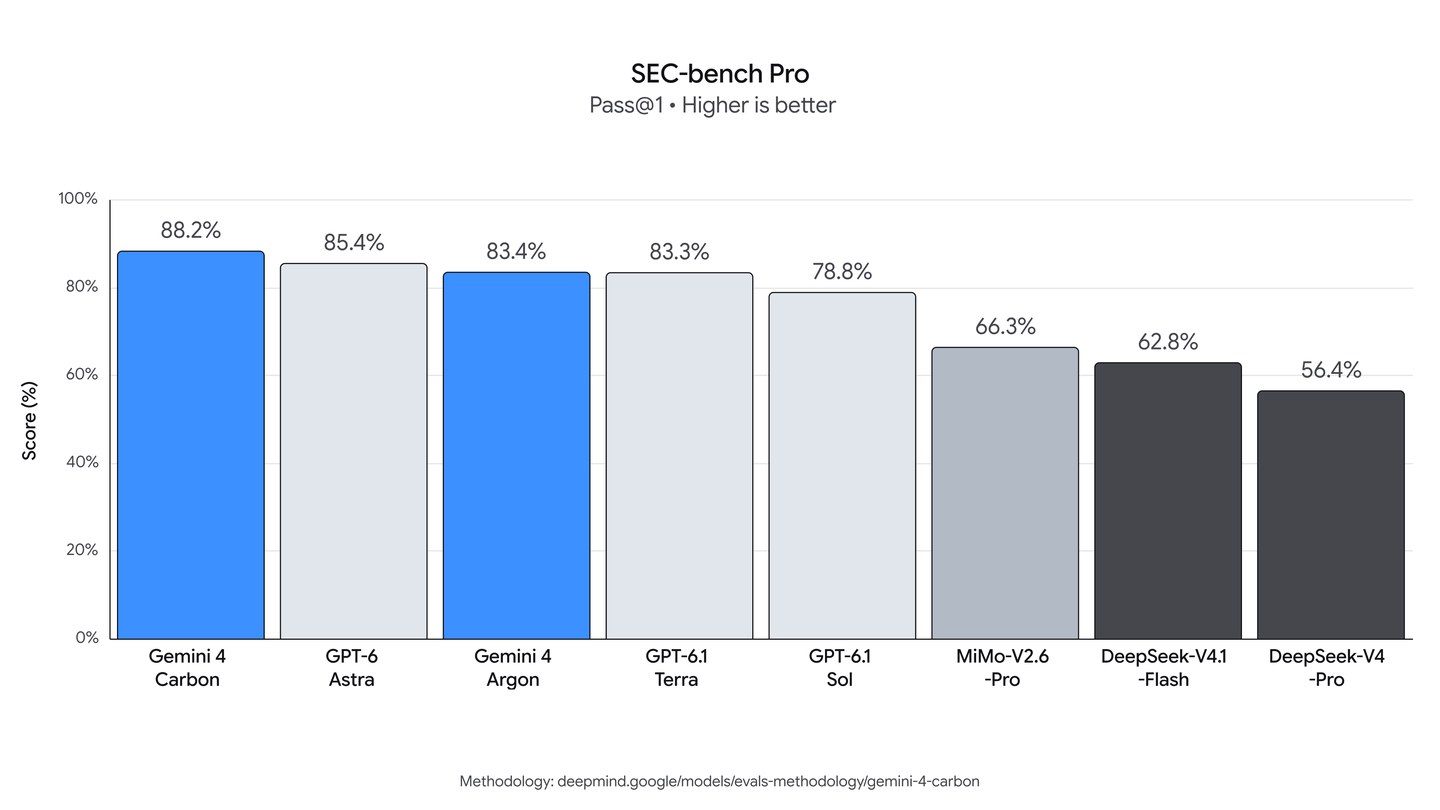
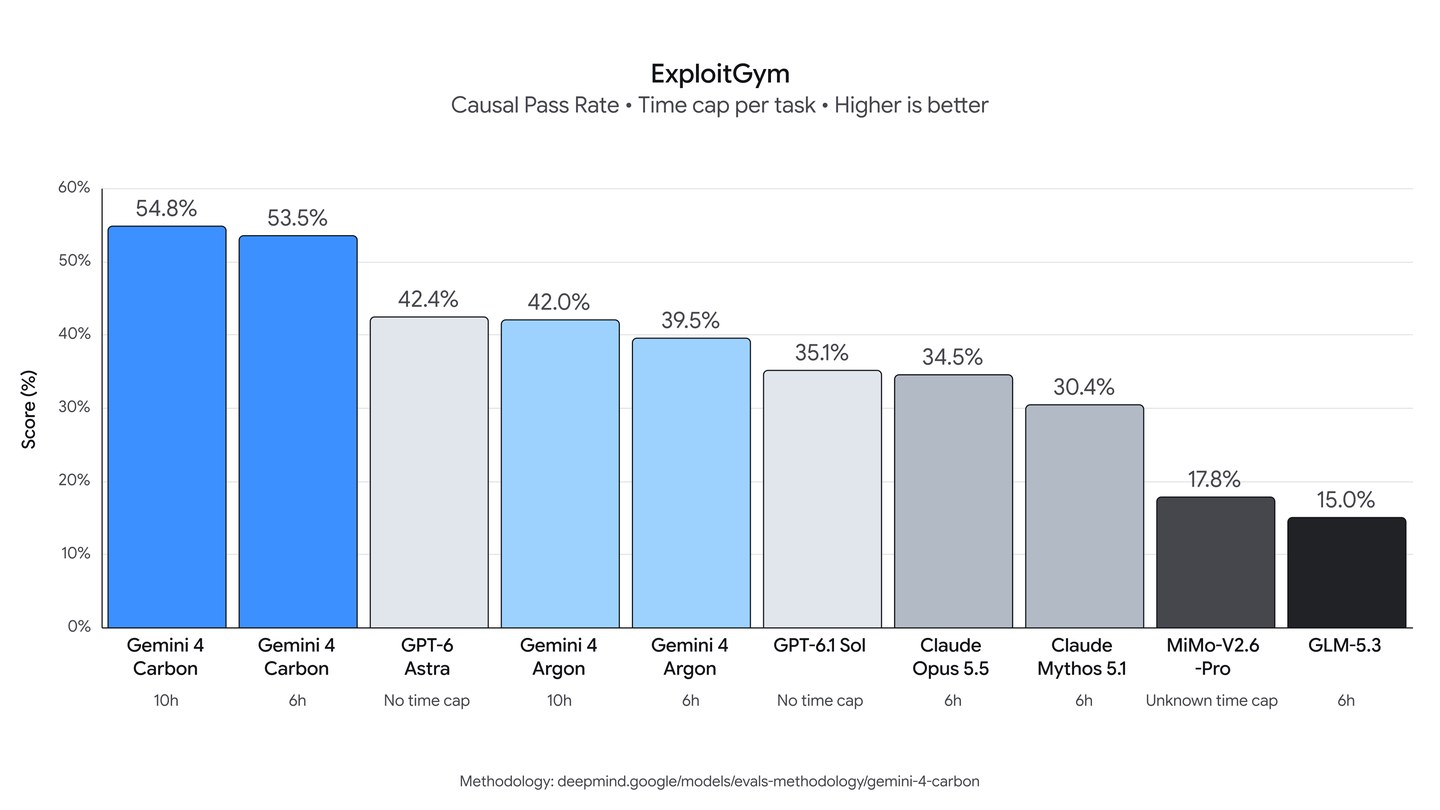
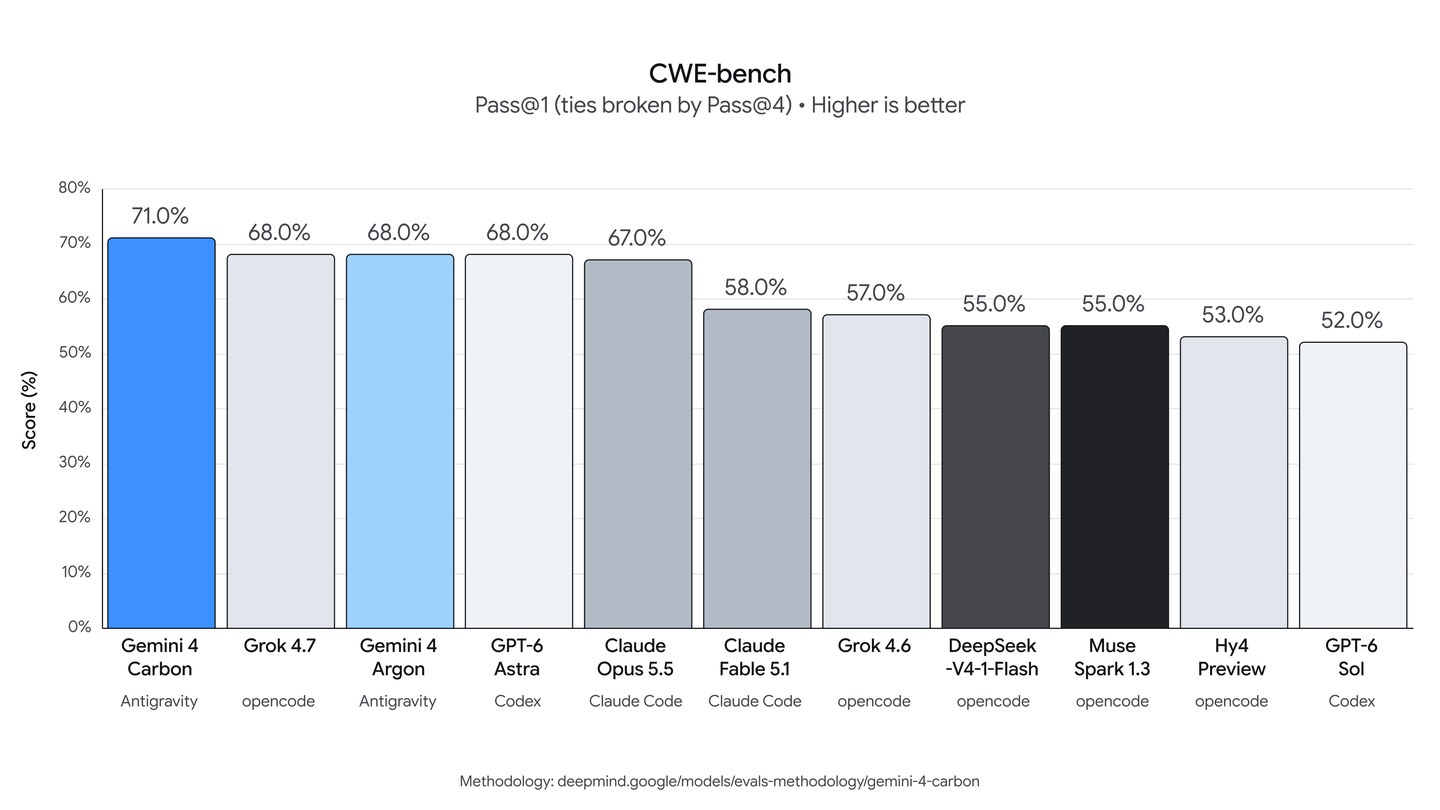
Google frames Carbon around the defender's workflow: find a vulnerability, check whether it can be exploited, then fix it. On external benchmarks, evaluated without guardrails, Google reports:
- Finding flaws: 88.2% on SEC-bench Pro
- Validating exploitability: 54.8% on ExploitGym
- Patching: 71.0% on Collinear's CWE-bench
On internal benchmarks, Google says Carbon is more than 2x as successful as Argon at generating secure code. The Chrome team reported Carbon was more than 10x better than another lab's large frontier model at generating high-quality patches, and Wiz sees Carbon leading on web penetration-testing benchmarks.
Safety and honesty claims
Carbon uses the same layered safety stack as Argon: model training, real-time misuse defenses, prompt-injection resilience and chain-of-thought monitoring. Google's reported results:
- Successful cheating on Terminal-Bench 4.0 fell to 0.0%, with cheating attempts at 0.4%
- High-severity misalignment alerts in live internal coding dropped by almost 80%
- About 2x fewer unsupported claims than Argon in internal testing
- Overreach down 26% and under-service down 29%
- 0.0% attack success on Gray Swan's Indirect Prompt Injection benchmark, where Argon had 0.7%
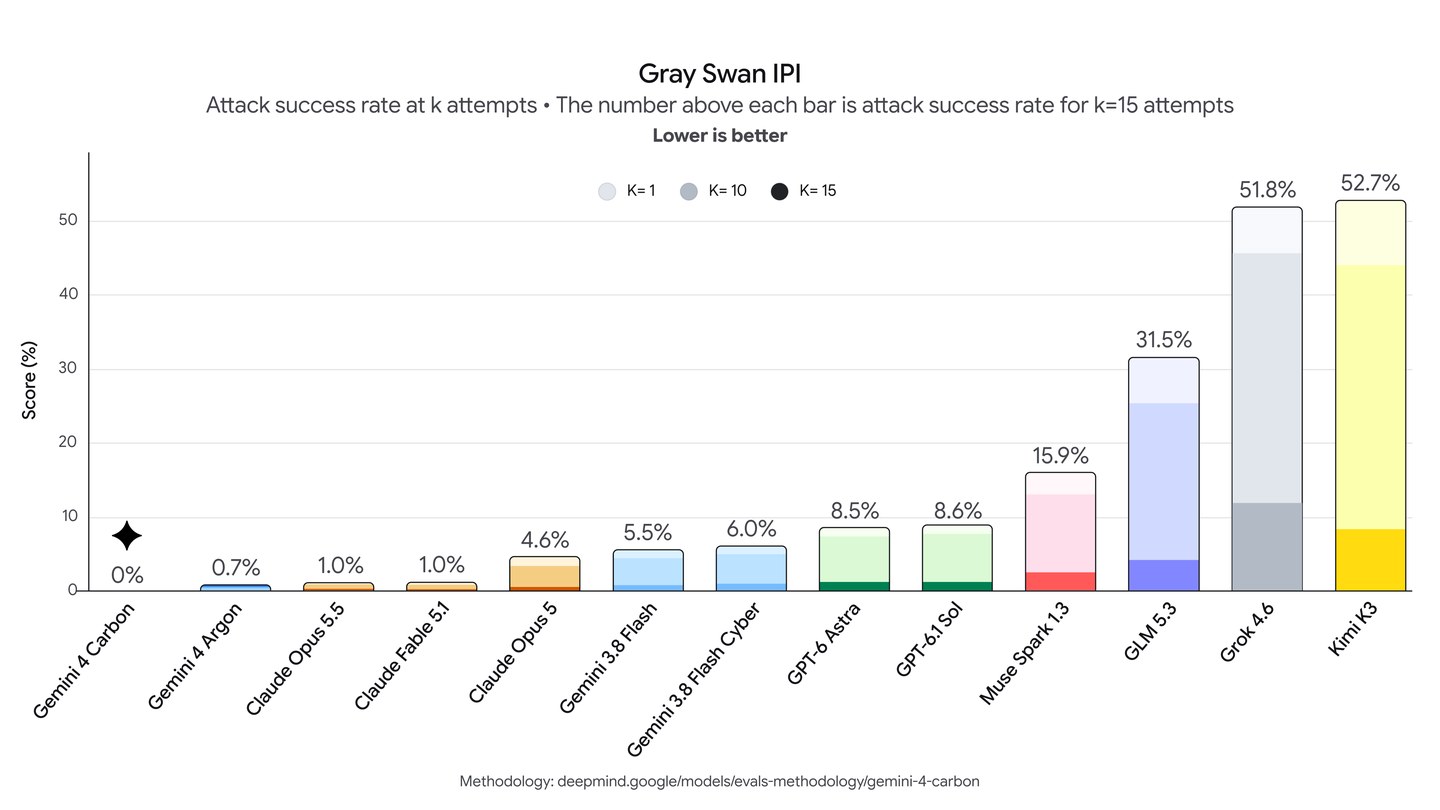
All of these figures come from Google. Independent testing on the public model is not possible yet.
Who gets it, and what it costs
Google is rolling Carbon out slowly and is taking part in the U.S. government's voluntary pre-release testing process. This week a subset of cyber defenders gets access, followed by more trusted partners through Google's Fairwind Program. Google says developers, businesses and consumers get it "as soon as possible", with no date yet.
The introductory API price matches Argon: $2 per million input tokens and $10 per million output tokens, with cached input 95% off. After the introductory period it rises to $4 and $20.
Links
Get your daily slice of AI
One short email with the best new AI tools, robots and AI & tech stock news. Free. Unsubscribe anytime.
We only use your email to send the newsletter.